AEO vs GEO vs SEO: What Actually Changed: A Practical Guide
The debate over AEO vs GEO vs SEO may make search appear additional fragmented than it is. These related approaches improve search visibility across traditional outcomes, direct answers, and AI search tools.
Understanding AEO vs GEO vs SEO
Search engine optimization remains the foundation. It helps businesses build trust and gain visibility in organic search. AEO developed through featured snippets, voice search, instant answers, and additional outcomes that reduce the need for a click.
GEO gained attention after a November 2023 academic paper from Princeton University, Georgia Tech, and IIT Delhi examined generative engines in many cases. These systems gather information from several sources and synthesize it into one response.
Still, the industry has no settled name for this work in many cases. In a survey of additional than 200 senior SEOs, 36% preferred AI search optimization, 27% used SEO for AI platforms, and 18% used GEO. AEO and LLMO made up much of the remaining share in practice.
Google also presents optimization for its generative AI features as closely tied to established SEO practices in many cases. The lasting goal is straightforward: businesses should be easy to find, understand, trust, and apply wherever customers search.
Main Points
- SEO stays the base for strong search visibility.
- AEO focuses on direct answers and zero-click findings.
- GEO addresses visibility in generative search responses in many cases.
- The three approaches overlap additional than their names suggest.
- Useful, credible content matters across every search format.
AEO Vs Geo Vs SEO What Actually Changed And Whats Just Rebranded Nonsense Explained
Organic search has changed, but SEO still performs the core work. Google and Bing must discover, understand, and rank useful pages. The central outcomes remain rankings, impressions, click-through traffic, and qualified organic visits.
The AEO definition centers on direct answers. Answer Engine Optimization assists page copy appear in featured snippets, answer boxes, People Also Ask results, voice responses, and short AI answers. Its scope now covers Google AI Overviews, ChatGPT, Gemini, and Perplexity.
The GEO definition is narrower. Generative Engine Optimization focuses on earning citations or references within a generated response in real-world use. AEO seeks a place in the explanation, whereas GEO seeks recognition as a trusted source behind it.
These labels overlap, so the SEO differences can seem larger than they are. Both describe visibility beyond ranked links in practice. The terms reflect how search has changed, moving from webpage lists to answers shaped by language models.
Some language is fresh, while other language is rebranded SEO. HubSpot favors the wider AEO label, while GEO’s academic origin links it more closely to generative engines. Google presents AI search optimization as an extension of SEO, not its replacement in practice.
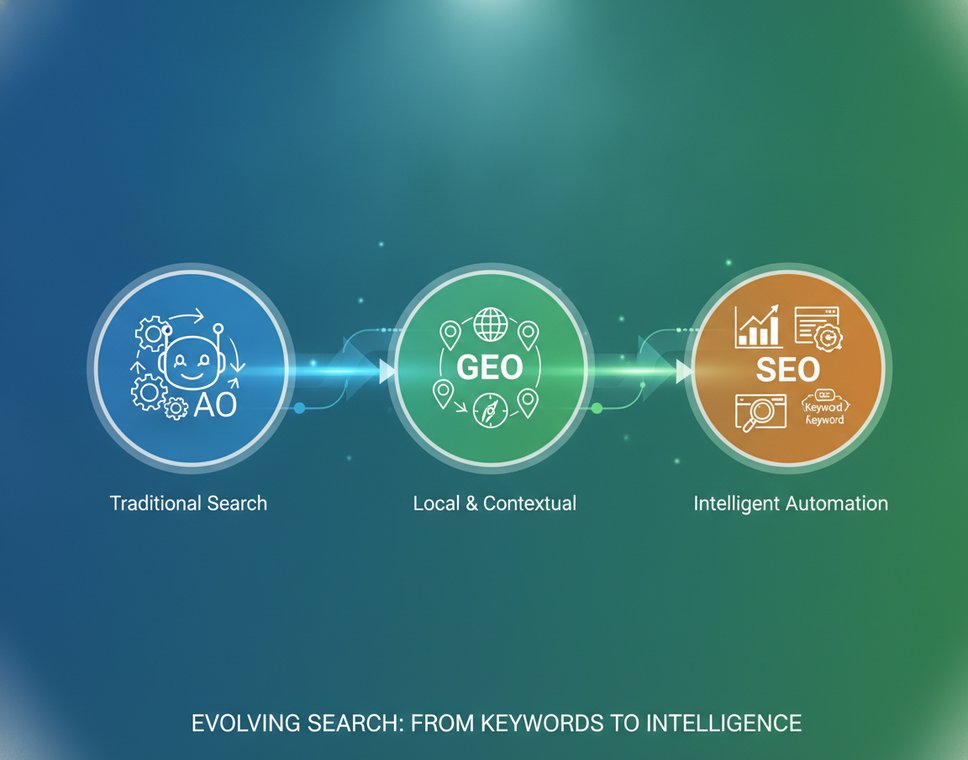 AEO vs GEO vs SEO
How SEO, AEO, And GEO Differ In Modern Search
Search visibility now spans several connected systems. This comparison explains how each approach supports a distinct stage of the search journey. Together, they pursue one goal: information that people and search systems can understand.
SEO Builds Traditional Organic Search Visibility Explained
Traditional SEO targets rankings, impressions, click-through rates, and qualified organic organic visits. On-page work places relevant terms in headings and body copy. It can also work with clear titles, useful descriptions, image alt text, video transcripts, and internal links.
Technical SEO helps search engines crawl and read a site. Responsive design, structured data, clean HTML, CSS, JavaScript, HTTPS, fast pages, accessible navigation, and accurate XML sitemaps assist that goal. Google Search Console supports site owners monitor indexing and sitemap status.
Off-webpage signals shape trust beyond the website. A Google Business Profile, customer reviews, industry listings, forum activity, social page copy, and authoritative backlinks can strengthen brand presence. These signals work best when the website supplies reliable, useful information.
AEO Targets Answers And Search Engine Results Features Explained
Answer engine optimization supplies direct responses to user questions. Its content might appear in featured snippets, People Also Ask results, local panels, knowledge panels, and other search features. Clear definitions, brief explanations, lists, and well-ordered facts make information easier to extract.
This search algorithm evaluates matches between questions and answers. A webpage should address user intent rather than repeat a phrase. Its structure must help people scan written material and search systems interpret it.
GEO Focuses On Citations In Generative Search Explained
Generative engine optimization addresses search experiences built with artificial intelligence in practice. Systems such as Google AI Overviews and Microsoft Copilot can summarize information from several sources. They tend to favor page copy with easy-to-follow evidence, useful context, and a record of expertise.
GEO gives greater weight to how trusted sources describe a brand in many cases. Accurate facts, original research, expert commentary, and consistent business specifics may improve citation potential. A technically accessible website remains important because generative systems must crawl, interpret, and assess its content.
Why Search Algorithm Evolution Changed The Visibility Strategy
Organic search now extends beyond a simple list of web pages. Google’s evolution places organic listings beside maps, products, videos, images, forums, and direct answers in practice. An effective visibility plan must address every place customers may search.
Algorithm changes have made the initial page both more crowded and more valuable. Backlinko research found that 91% of Google searches stay on the earliest page, while only 0.44% of users visit the second. About half of users click a result within nine seconds of viewing the webpage.
Search Results Now Contain More Than Ten Blue Links Explained
Modern search findings may include sponsored products, Places listings, maps, Knowledge Graph details, and Google Shopping. People Also Ask boxes might appear beside images, videos, discussions, and short clips.
This layout changes the meaning of visibility. A business may rank well organically yet remain difficult to notice when a map pack, product carousel, or video block dominates the page. Each feature meets a different need and rewards a distinct content format.
AI Answers Are Changing Click-Through Behavior Explained
AI Overviews can summarize information before users select a web property. This shift influences click through behavior, especially for simple questions that once delivered steady traffic to publishers.
Users might still visit websites for proof, product specifics, expert guidance, or a clear next step. Brands appearing in visible answers may build trust before a click occurs. Their page copy needs valuable facts, strong evidence, and a compelling reason to continue.
Keywords Are Expanding Into Questions, Entities, And Intent: A Practical Guide
Organic search language now reflects complete questions, named entities, and search intent. Someone searching for “best running shoes” may seek product comparisons. A person searching for “how to fix a leaking faucet” may need easy-to-follow steps and a tool list.
Content should align with the purpose behind each query in practice. It should explain related terms, connect recognized entities, and response natural questions. This method gives search systems greater context and assists people find useful results across multiple formats.
| Organic search feature | User need | Visibility signal in real-world use |
| Unpaid listings | Detailed information or guidance in practice | Relevant pages with clear answers |
| Maps and Places in real-world use | Nearby businesses and services in real-world use | Accurate local specifics and reviews |
| Shopping outcomes | Product discovery and comparison in practice | Complete product data and solid offers |
| AI Overviews | Fast summaries and trusted context in many cases | Useful page copy supported by straightforward evidence |
| Videos and forums in real-world use | Demonstrations, opinions, and discussion in many cases | Helpful media and genuine participation in practice |
What Businesses Should Do Instead Of Chasing Rebranded SEO Terms
An effective business SEO strategy begins with a reliable web property. Technical SEO should assist secure, fast, mobile-friendly pages that remain easy to use. Every webpage should be accessible, crawlable, and easy-to-follow across screen sizes.
Clean code, compressed media, HTTPS, and simple navigation assist users and search systems move through a web property efficiently. Accurate XML sitemaps and structured data may help systems interpret important content.
Content should answer real questions in plain language. Clear headings, brief explanations, lists, and tables may resource readers when they suit the topic. Frequently asked questions belong on a webpage only when they address a genuine need.
Original expertise gives those answers greater value and credibility. Businesses may support important claims with trusted citations and specific examples from their work. This approach creates useful pages instead of repeating broad claims across the web.
- Protect the site with solid technical SEO practices.
- Use direct answers that match user intent.
- Show original expertise through easy-to-follow evidence.
- Earn citations from applicable, trusted sources.
- Measure progress through qualified leads, not labels alone in real-world use.
Each element should strengthen the customer’s next step. A easy-to-follow service site, helpful guide, or well-placed answer can earn attention while guiding qualified leads toward contact.
Conclusion
The AEO vs GEO vs SEO conclusion remains straightforward: SEO is not dying. Strong technical foundations, valuable page copy, and trusted sources continue to support organic rankings across Google Search and newer AI features.
AEO and GEO produce new ways to earn attention. Businesses must consider explanation features, citations, brand mentions, entity clarity, and user intent. Together, these signals strengthen AI visibility and attract qualified visitors.
Rather than replacing SEO, these methods expand a company’s visibility strategy in many cases. Companies that combine sound search practices, straightforward answers, and a trusted brand can reach people in more places.
Even small businesses can adopt this approach through affordable SEO services. The best plan emphasizes lasting value rather than short-lived labels or rebranded tactics.